Postoperative Physiotherapy
Postoperative physiotherapy supports the individual recovery of mobility, strength and physical capacity after surgery. Learn more about rehabilitation at Theraist Physiotherapy in Bludenz.
How Can Physiotherapy Help After Surgery?
Surgery is often only one part of the overall treatment process.
After a surgical procedure, pain, swelling, reduced mobility, or loss of muscle strength can affect everyday life and physical capacity.
Many patients therefore ask:
How can physiotherapy support rehabilitation after surgery?
Postoperative physiotherapy can be an important part of the rehabilitation process.
The aim of treatment is to gradually improve mobility, rebuild physical function, and individually support the return to everyday life, work, or sport.
It is essential that physiotherapy is adapted to the type of surgery, the current stage of recovery, and the patient's individual physical abilities.
At Theraist Physiotherapy Bludenz, we consider not only the surgical procedure itself but, above all, your current mobility, muscle strength, physical capacity, and personal goals.
What Is Postoperative Physiotherapy?
Postoperative physiotherapy refers to physiotherapy treatment following a surgical procedure.
Depending on the type of surgery, different physical limitations may occur.
Possible symptoms and limitations include:
- Reduced mobility
- Muscle weakness
- Pain
- Swelling
- Uncertainty during movement
- Reduced physical capacity
- Difficulty walking
- Problems with everyday movements
- Reduced joint function
Physiotherapy treatment is individually adapted to the type of surgery and the current stage of rehabilitation.
Why Is Physiotherapy Important After Surgery?
After surgery, physical capacity may temporarily change.
Pain, necessary immobilisation, or reduced physical activity can lead to a decrease in mobility and muscle strength.
Movement patterns may also change.
Postoperative physiotherapy can help gradually rebuild physical abilities.
Possible treatment goals include:
- Improving mobility
- Rebuilding muscle strength
- Supporting joint function
- Improving coordination and movement control
- Gradually increasing physical load
- Improving walking ability
- Supporting the return to everyday activities
- Preparing for work or sporting activities
The main treatment goals always depend on the individual's situation.
When Should Physiotherapy Begin After Surgery?
The appropriate time to begin physiotherapy depends on the type of surgical procedure and the individual recovery process.
After some operations, physiotherapy begins while the patient is still in hospital.
In other cases, further rehabilitation starts after discharge or following a specific stage of wound healing.
Medical instructions and physical load restrictions should always be considered.
These may include:
- Permitted weight-bearing on the operated area
- Movement restrictions
- Use of crutches
- Wearing a brace
- Time-related restrictions for certain movements
- Sporting or occupational load restrictions
Physiotherapy treatment should be adapted to these instructions.
What Does Postoperative Physiotherapy Involve?
At the beginning of physiotherapy treatment, an individual assessment is carried out.
The following areas may be evaluated:
- Mobility
- Muscle strength
- Swelling
- Pain behaviour
- Joint function
- Gait
- Coordination
- Movement control
- Physical capacity
- Functional everyday movements
We also consider the type of surgery and any available medical recommendations.
Based on this information, an individual treatment plan is developed.
The treatment plan is regularly reviewed throughout rehabilitation and adapted according to the patient's progress.
Which Physiotherapy Treatments Are Used After Surgery?
Physiotherapy treatment depends on the surgical procedure, the stage of recovery, and the patient's individual symptoms.
Possible physiotherapy treatments include:
- Active exercise therapy
- Mobilisation
- Individual strength training
- Coordination training
- Balance training
- Gait training
- Manual therapy
- Functional training
- Gradual physical conditioning
- Individual exercise programmes
Not every treatment method is necessary for every patient.
The choice of treatment is based on the findings of the individual physiotherapy assessment.
Which Exercises Are Used After Surgery?
There is no single exercise that is suitable after every surgical procedure.
The choice of exercises depends on the operated area, the stage of recovery, and the patient's current physical capacity.
Possible training areas include:
- Mobility of the affected joint
- Muscle activation
- Strength training
- Balance
- Coordination
- Movement control
- Gait training
- Stair training
- Trunk stability
- Functional everyday movements
As rehabilitation progresses, exercises can gradually become more challenging.
An individually adapted increase in physical load is essential.
How Important Is Strength Training After Surgery?
Muscle strength may temporarily decrease after surgery.
This can be influenced by reduced physical activity, pain, or the need to temporarily reduce load on the operated area.
Targeted strength training can therefore be an important part of postoperative rehabilitation.
Training load is gradually adapted to the patient's current physical capacity.
Possible goals of strength training include:
- Improving muscle strength
- Building physical capacity
- Improving joint control
- Supporting functional movements
- Preparing for everyday activities and work
- Preparing for sporting activities
Training intensity should be regularly adapted throughout the rehabilitation process.
How Can Mobility Be Improved After Surgery?
After certain surgical procedures, joint mobility may temporarily be restricted.
There can be various reasons for this.
Swelling, pain, reduced movement, or medically prescribed movement restrictions may play a role.
Depending on the stage of recovery, mobility exercises and active movements may be used.
Manual therapy may also be used as a complementary treatment for certain movement restrictions.
The aim is to gradually support mobility in a controlled way and according to the individual's situation.
What Role Does Gradual Loading Play After Surgery?
An important part of postoperative physiotherapy is the gradual development of physical capacity.
Many patients feel uncertain after surgery and ask:
How much physical load is safe for me?
There is no general answer to this question.
The appropriate load depends on the type of surgery, the stage of recovery, medical instructions, and the individual's physical response.
During physiotherapy, physical load is gradually adapted.
The following factors may be considered:
- Pain
- Swelling
- Movement quality
- Muscle strength
- Physical response after exercise
- Capacity during everyday activities
The aim is to develop physical capacity in a controlled and individually adapted way.
Physiotherapy After Knee Surgery
After knee surgery, mobility, muscle strength, and walking ability may temporarily be reduced.
Postoperative physiotherapy may be used after procedures such as:
- Anterior cruciate ligament surgery
- Meniscus surgery
- Knee replacement surgery
- Cartilage surgery
- Other orthopaedic knee procedures
Possible treatment goals include improving knee mobility, rebuilding leg strength, and gradually developing walking and physical capacity.
Physiotherapy After Shoulder Surgery
After shoulder surgery, arm mobility may initially be restricted.
Depending on the surgical procedure, certain movements or physical loads may temporarily be limited.
Postoperative physiotherapy may be used after procedures such as:
- Rotator cuff surgery
- Shoulder stabilisation surgery
- Surgery following shoulder dislocation
- Shoulder replacement surgery
- Other surgical procedures involving the shoulder
Treatment is adapted to the stage of recovery and any medical restrictions.
Physiotherapy After Hip Surgery
After hip surgery, walking, muscle strength, and everyday movements may temporarily be affected.
Rehabilitation may include targeted training of:
- Walking ability
- Leg strength
- Balance
- Mobility
- Stair climbing
- Functional everyday movements
Treatment goals are individually adapted to the patient's physical abilities and rehabilitation progress.
How Long Does Postoperative Physiotherapy Take?
The duration of postoperative rehabilitation varies from person to person.
It depends on factors such as:
- Type of surgery
- Operated body area
- Recovery process
- Initial physical condition
- Muscle strength
- Mobility
- Personal rehabilitation goals
- Occupational or sporting demands
There is therefore no universally applicable treatment duration.
The number of physiotherapy sessions alone is not the most important factor.
An important question is:
How are mobility, strength, and physical capacity developing throughout rehabilitation?
The treatment plan should be regularly reviewed and adapted accordingly.
When Can You Return to Sport After Surgery?
Returning to sport depends on the type of surgery and the physical demands of the specific sport.
The time since surgery should not be the only factor considered.
Physical abilities may also play an important role.
These include:
- Muscle strength
- Mobility
- Balance
- Coordination
- Movement control
- Physical capacity
- Sport-specific abilities
Depending on the sport, functional exercises and sport-specific physical demands may be gradually integrated into rehabilitation.
Postoperative Physiotherapy in Bludenz
Have you had surgery and would like to gradually rebuild your mobility, strength, and physical capacity?
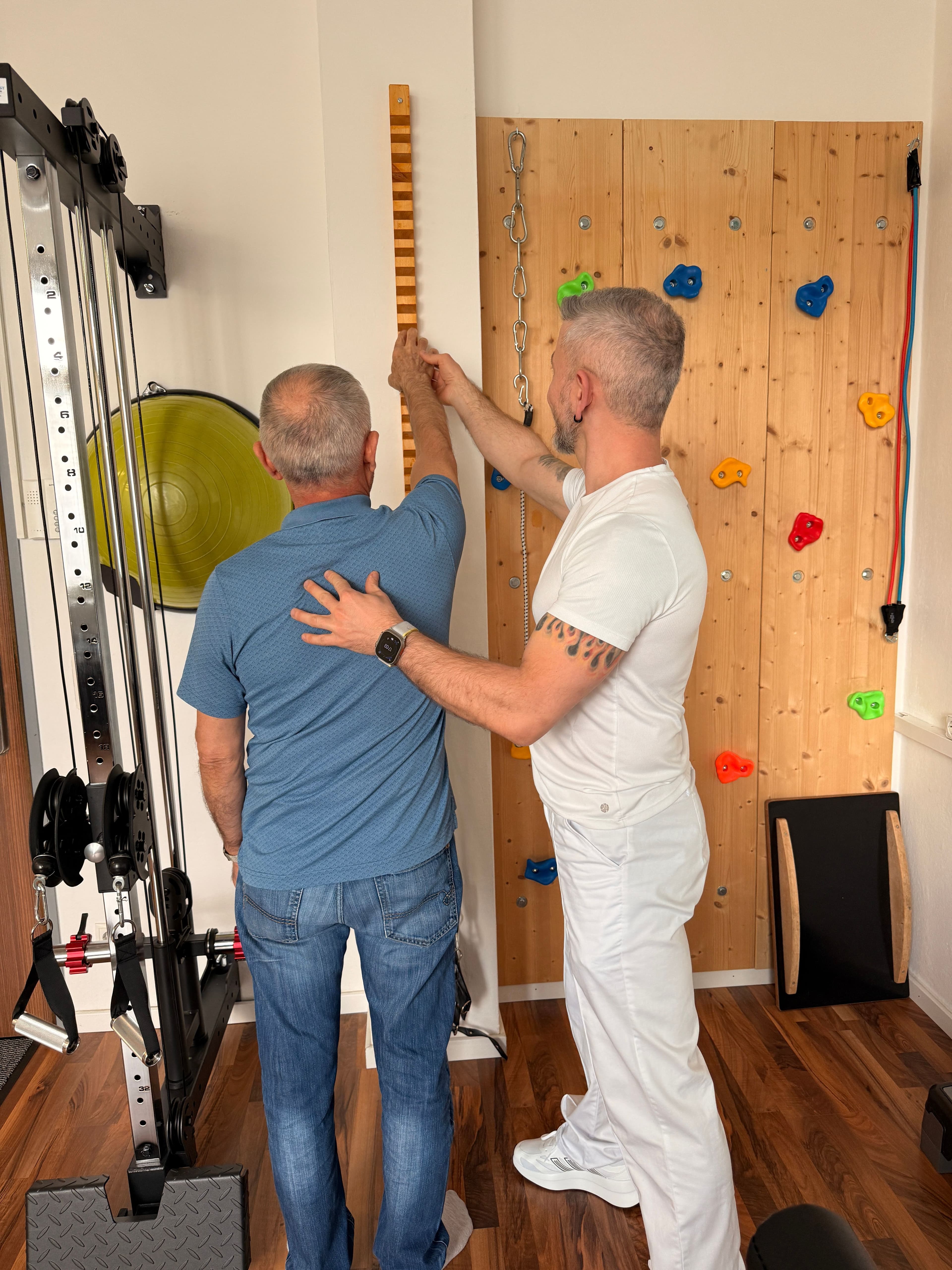
At Theraist Physiotherapy Bludenz, individual and active postoperative rehabilitation is at the centre of our approach.
Depending on the surgical procedure and physiotherapy assessment findings, treatment may include:
- Individual physiotherapy assessment
- Active exercise therapy
- Mobilisation
- Manual therapy
- Individual strength training
- Gait training
- Balance and coordination training
- Functional training
- Gradual physical conditioning
- Individual exercise programmes
We treat patients from Bludenz and the surrounding region, including Bürs, Nüziders, Ludesch, Thüringen, the Brandnertal, Montafon, and the Walgau.
Our goal is to individually support your rehabilitation and gradually develop your physical abilities for everyday life, work, or sport.
Please Note: The course of rehabilitation depends on several factors, including the type of surgery, the individual healing process, and the recommendations of your orthopedic surgeon or treating physician. Your physiotherapy program will be tailored accordingly to your individual needs and recovery.
Please Note: This content is provided for general informational purposes only and does not replace an individual medical or physiotherapy assessment. If you experience new, severe, or unexplained symptoms, a medical evaluation may be necessary.
Important: If you experience sudden weakness or paralysis, numbness or loss of sensation, or problems with bladder or bowel control, seek immediate medical attention.
Begin your journey
Fill in the form – we will contact you within 24 hours for a no-obligation first appointment.
Book appointment
